Define the operating need
We begin with who needs to see the message, from where, how often content changes, who controls it and what success looks like.
Electronic message centers and digital displays planned around the audience, viewing distance, content needs, location, controls and long-term service relationship.
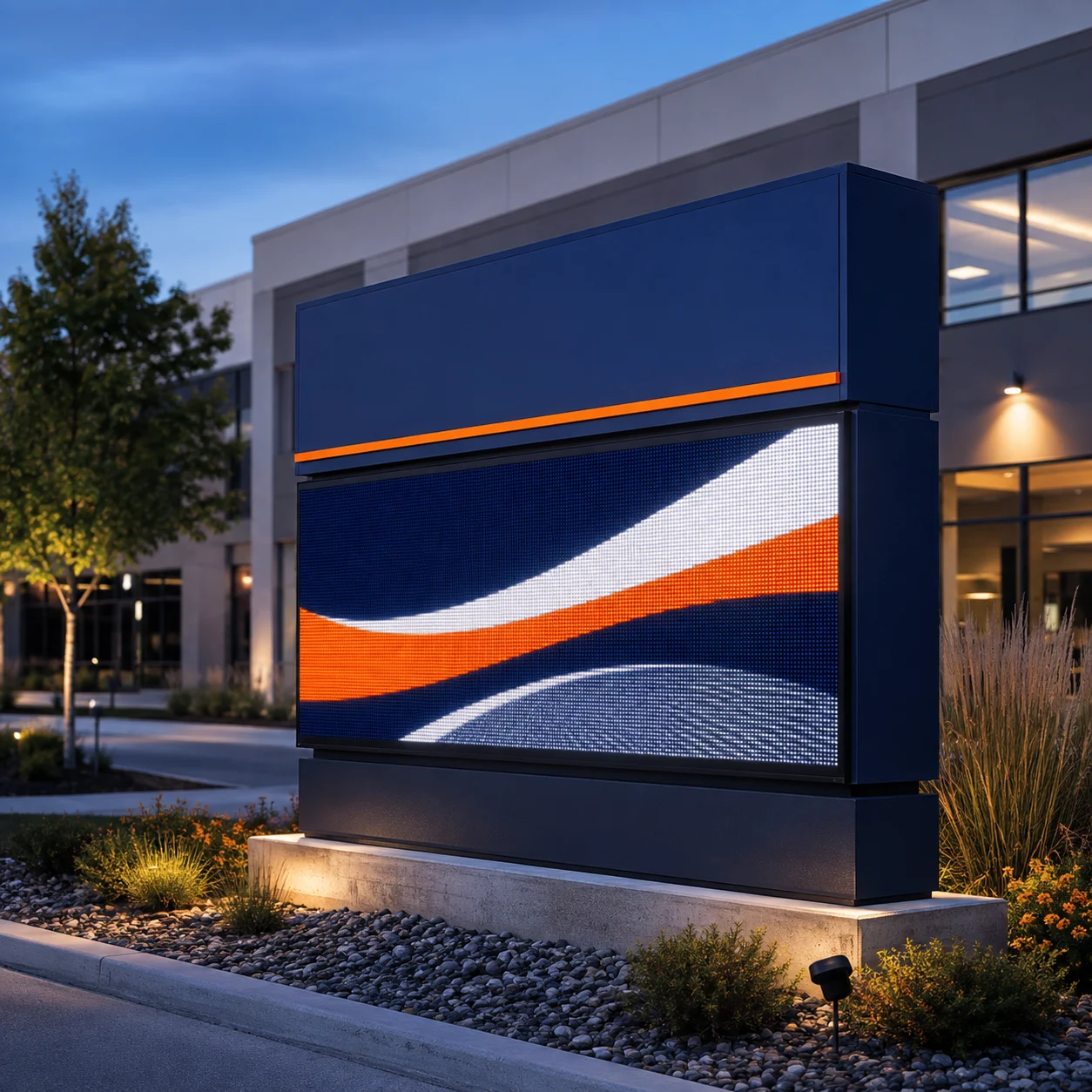
Electronic display projects can include large-resolution outdoor LED message centers, interior digital signs, digital billboard-style displays, scrolling message boards, synchronized time and temperature readouts, and display systems for arenas, entertainment venues and assembly areas. Full Circle Signage coordinates the discovery, sourcing and project relationships needed to move from an operational goal to a supportable installed system. Full Circle Signage helps define the scope, prepare the production details, and coordinate suitable production or installation resources.
We begin with who needs to see the message, from where, how often content changes, who controls it and what success looks like.
Display manufacturers, sign fabricators, installers, electricians, network or controls resources and local reviewers are coordinated around one documented scope.
Content handoff, user access, training, warranty contacts, service response and future expansion are discussed before the system is released for production.
Choose a starting point below, or send a photo and rough dimensions. We will help narrow the material, finish, quantity, delivery, and installation path.
Start with the communication job, audience and operating relationship—not a display specification alone. The recommended system follows viewing distance, content, location, controls, structure, utilities, approvals and long-term support needs.
Full-color LED communication for roadside, campus, school, church, retail, civic or commercial visibility, integrated into a monument, pylon or other approved sign structure.
Plan an outdoor message center →Customer, staff, menu, schedule or operational messaging for lobbies, counters, corridors and assembly spaces.
Plan an interior display →Large-format, multi-display, time-and-temperature, scoreboard-adjacent or synchronized information systems for entertainment and assembly environments.
Discuss a display system →Early discovery establishes the right display class and partner team. Final schedule follows site review, system selection, engineering or permits when required, utilities, production, installation planning, commissioning and operator handoff.
The right electronic display starts with the job it must perform. These are coordinated system paths—not interchangeable products or guaranteed configurations.
Full-color or text-forward displays for business identification, promotions, schedules, public information, and changing daily messages.
Fine-pitch LED, video walls, menu and information displays for lobbies, retail, worship, education, corporate, and public-facing interiors.
Digital-out-of-home, scrolling message, and large-format advertising systems planned around audience, dwell time, content rotation, and service access.
Fixed-digit and data-fed displays for time, temperature, pricing, schedules, capacity, scoring, or other frequently updated information.
Scoreboards, ribbon or perimeter displays, large-format video, event messaging, sponsor content, and audience information for gathering spaces.
Repeatable display standards with controlled user access, scheduled content, location permissions, training, documentation, and coordinated service planning.
A display is more than the visible LED face. Full Circle helps organize the questions that affect the system, site, operator experience, installation, and long-term support before a manufacturer path is selected.
Start a display project brief ↗Viewing distance, travel speed, dwell time, sight lines, viewing angle, ambient light, and the amount of detail a message must carry.
Pixel pitch, physical dimensions, resolution, color, brightness, text size, animation or video needs, and readable message duration.
Existing sign conditions, mounting, wind and structural review, cabinet access, ventilation, weather exposure, electrical service, and installation access.
Local or cloud control, user permissions, scheduling, network availability, data feeds, diagnostics, proof-of-performance, and content approval.
Property approval, permits, message frequency, brightness or dimming requirements, operating hours, and other location-specific restrictions.
Training, warranty path, parts availability, remote diagnostics, service coverage, response expectations, content support, and future expansion.
A lower opening quote is not automatically the lower-cost system. A responsible comparison uses the same scope, ownership period, operating assumptions, support expectations, and measurable business goals for every proposal.
Track offers, event attendance, inquiries, sponsor inventory, tenant promotion, or other outcomes that can be tied to displayed messages.
Compare printing, changeouts, temporary banners, rented media, travel, and staff time that a remotely updated display may reduce or replace.
Account for faster schedule changes, wayfinding, safety notices, capacity or price updates, and consistent communication across locations.
Message quality, readability, relevance, update frequency, scheduling, and staff ownership influence whether the display creates measurable value.
This is a decision framework, not a performance promise. Define the measurement period, baseline, gross margin or savings assumptions, attribution method, and content plan before comparing projected returns. Actual results vary by location, audience, content, operation, and market conditions.
When a property has useful visibility and a team willing to keep messages current, an on-site LED display can become a durable communication asset at the point where customers arrive, choose, and act. Off-site media remains useful for reaching people elsewhere, but access usually ends when campaign spending stops.
Promotions, schedules, services, events, and operational messages appear where a nearby customer can respond.
One properly supported system can carry changing campaigns throughout its useful service period.
Approved users can schedule messages without buying a new off-site placement for every update; operating and content costs still apply.
Regular, readable, relevant content can improve the effective cost per exposure over time, subject to actual traffic and response.
Annualize the installed display investment over the selected planning term, then add electricity, software, connectivity, content, staff time, maintenance, and expected service costs. Unlike recurring media placement, the owner controls the available display time after installation, subject to local rules and system availability.
Best measured with offer codes, promoted URLs, campaign-specific QR destinations, “how did you hear about us?” responses, traffic or transaction comparisons, and dated message schedules.Paid search, social, radio, print, mail, and billboards can introduce the business to audiences away from the property. Include media spend, creative production, agency or management fees, landing pages, call handling, tracking, and repeated campaign costs—not only the reported click or impression cost.
Best measured from campaign spend through qualified lead, completed sale, and retained customer using the same attribution rules.Full Circle can compare established manufacturer paths while keeping the customer’s audience, environment, content workflow, service access and long-term ownership experience at the center of the decision.
Outdoor and indoor LED displays, message-control software, billboard applications and synchronized digit or price displays.
Outdoor electronic message centers, digital billboards, indoor LED video displays, scoreboards and venue systems.
Message displays, large-format video, digital billboards, scoreboards, transportation information and fixed-digit systems.
Indoor and outdoor direct-view LED, fine-pitch displays, digital-out-of-home, stadium, entertainment and immersive display applications.
Indoor and outdoor LED displays, electronic message centers, multi-location controls, content support, operator training and ongoing technical assistance.
Additional domestic and global systems can be evaluated when the application, procurement channel, service territory, integration or budget calls for another fit.
Share the address, site or interior photos, approximate viewing distance, desired display area, message types, operating hours, target completion date and any existing sign, power or network information.
Yes. The useful choice depends on viewing distance, content detail, physical size, brightness needs and budget. The goal is an appropriate display—not simply the highest specification available.
Begin with a stated time period and measurable goals such as incremental gross profit, inquiries, event attendance, sponsor revenue, avoided printing or changeout costs, or operational time savings. Compare those benefits with the complete installed and operating cost. Projections are planning tools, not guaranteed results, and should identify their assumptions.
The opening price may not include the same structure, electrical work, permits, software, connectivity, training, energy use, maintenance, warranty labor, replacement parts, diagnostics or service response. Comparing the same scope and ownership period makes proposals more meaningful.
The project may require review of local sign rules, property approval, structure, engineering, electrical service, communications, access, ventilation, brightness or operating restrictions and the final mounting plan.
Yes. Controller access, content workflow, operator training, warranty responsibilities, diagnostics, service contacts and replacement planning can be included in the coordinated handoff.
Start with the service area that matches your project. We support businesses throughout Southwest Virginia and coordinate signage programs across the United States.