- Permitted locations with meaningful traffic, clear sight lines, advertiser demand, and an operating plan
- Owners prepared for zoning, structural, electrical, service, content, and sales responsibilities
Out-of-home advertising
Digital billboards and DOOH
Plan a roadside digital advertising system around zoning, audience, ad rotation, proof of play, monitoring, revenue, and service access.
Operate multiple advertising positions from one display while documenting delivery and system health.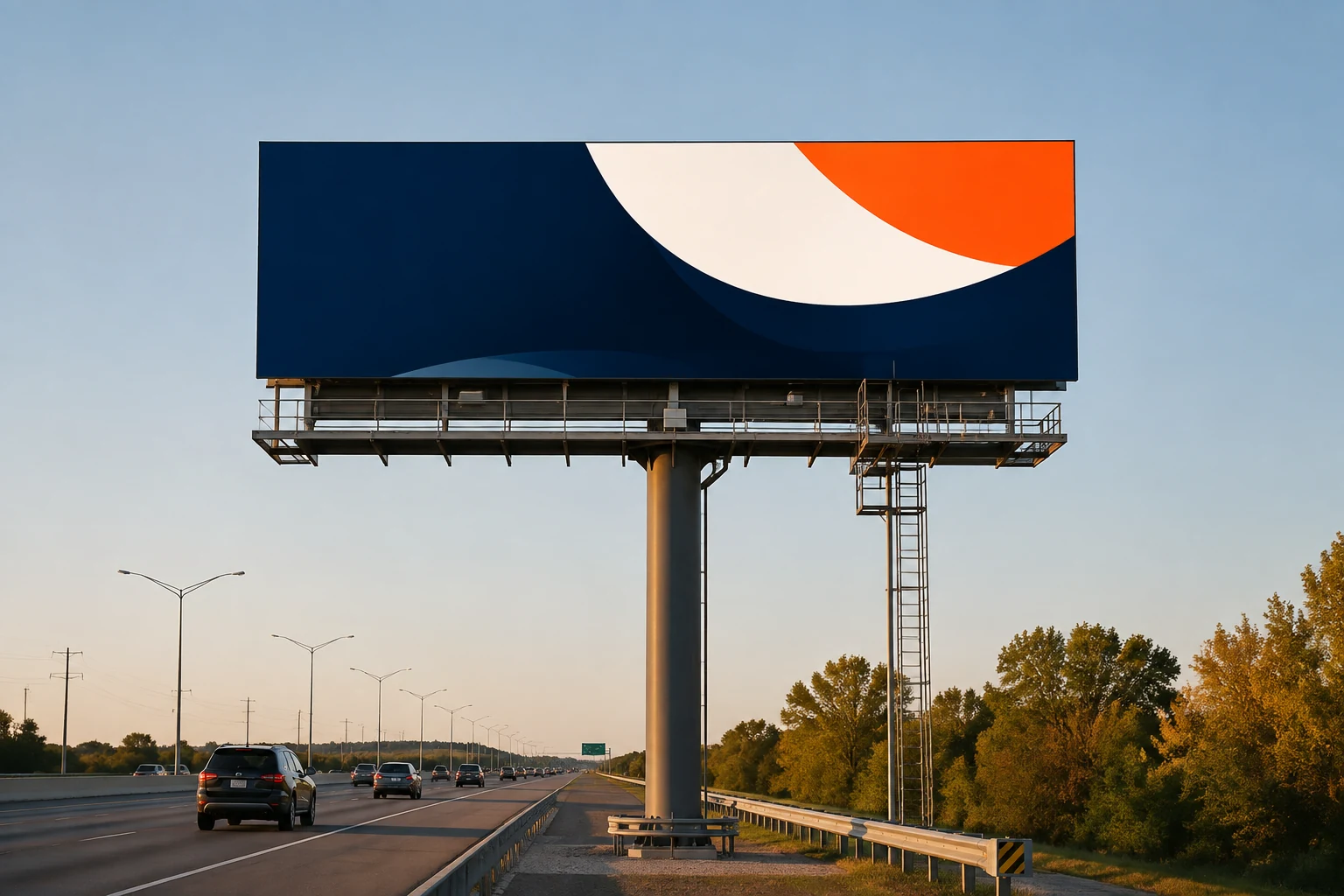
- Off-premise advertising is often regulated differently from an on-premise business sign
- Revenue, occupancy, impressions, rates, permits, and uptime must be modeled rather than assumed
Decide how the display will be used before choosing the hardware.
Bulletin, poster, wallscape, or site-specific format
Pixel pitch, cabinet access, diagnostics, proof of play, camera verification, and redundancy
Inventory, scheduling, monitoring, billing, and advertiser reporting workflow
Outdoor
Road traffic
Graphics · Video · Advertising rotation
Cloud · Scheduled · Centrally managed
Confirm what the site can support.
Confirm dimensions, sight lines, service access, power, data, ventilation, structure, permits, and property approval.
Document ambient light, operating hours, content ownership, and any accessibility or emergency-message requirements.
What affects project cost?
- Display area, structure, access, pixel pitch, and redundancy
- Zoning, engineering, utilities, installation, software, monitoring, sales operations, service, and downtime exposure
Ownership and lifecycle planning
- Plan commissioning, operator training, warranty contacts, diagnostics, maintenance access, spare-parts strategy, and eventual replacement.
- Compare labor, freight, software, connectivity, energy, content, downtime exposure, and service response—not hardware price alone.
What should be confirmed before ordering?
Start with the location, photos, available display area, typical audience and viewing distance, sample content, target date, and any known power, network, structure, or approval information.
Compare systems based on the site, content, and service plan.
Brand references are evaluation starting points, not claims of exclusivity, universal availability, or authorized-dealer status.
Manufacturer profileAbsen
Explore where Absen LED displays may fit commercial, sports, broadcast, rental, and creative display projects.
Review fit →Manufacturer profileDaktronicsExplore where Daktronics may fit message displays, billboards, video walls, sports, transportation, pricing, timing, and control systems.
Review fit →Manufacturer profileOptec DisplaysPotential fit for outdoor EMCs, indoor LED/video walls, digital billboards, price applications, and local or cloud multi-display content control.
Review fit →Manufacturer profileWatchfirePotential fit for outdoor LED signs, OOH digital billboards, sports displays and scoreboards, indoor LED video, and associated content-control ecosystems.
Review fit →03Plain-English answers
What we need to know before we quote.
What should I send to begin a digital billboards and dooh project?
Start with the location, photos, available display area, typical audience and viewing distance, sample content, target date, and any known power, network, structure, or approval information.
Do I need to choose a manufacturer first?
No. The useful manufacturer path follows the application, viewing conditions, controls, service access, schedule, and ownership priorities.
What is especially important for this display type?
Zoning, traffic orientation, readable content duration, advertiser operations, proof of play, uptime, remote diagnostics, and safe elevated service access drive the project.
Can Full Circle provide a firm price from this page?
Not responsibly. Site, display, control, installation, electrical, structural, permit, freight, service and support requirements must be aligned before pricing is confirmed.
You don’t need to choose a model first.
Send the location, a photo, approximate display area, audience, typical content, and desired timing. We’ll organize the next questions.
Discuss My LED Project ↗